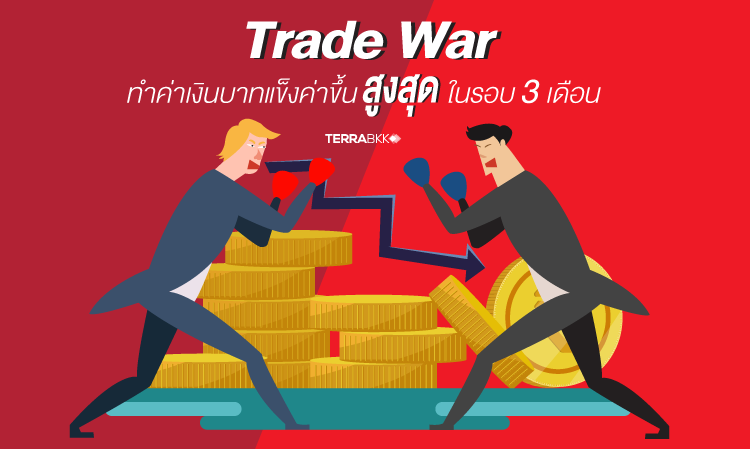
Trade War Effects: Thai Baht Reaches Highest Value in 3 Months, Leading in Asia
As the Trade War between the U.S. and China intensifies and trade negotiations remain unclear, the global economy is feeling the impact. There are concerns that the economy and trade in the global market will worsen, including Thailand, which is experiencing significant effects. Exports have continuously contracted for five months, and as of June 4, 2019, the Thai baht is at 31.52 baht per U.S. dollar, appreciating approximately 1% in just one day from 31.92 baht per U.S. dollar on Friday, May 31, 2019 (according to the Bank of Thailand).
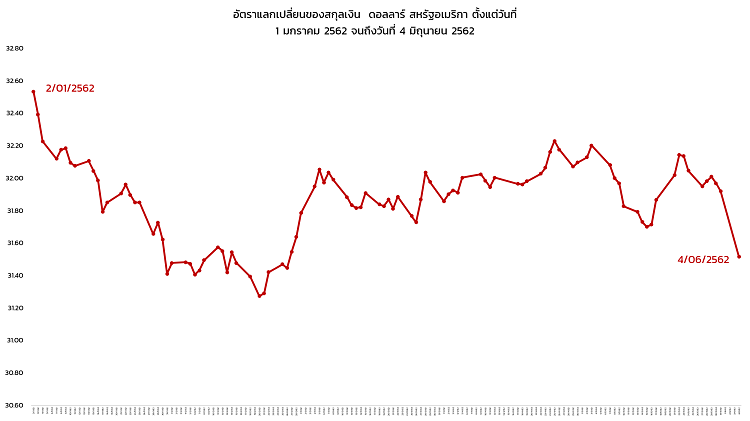
Currently, the Thai baht is considered the strongest currency in Asia, having appreciated by 3% since the beginning of 2019. Additionally, the baht ranks second among emerging market currencies globally. The Trade War is a significant factor contributing to the baht's strength in three main areas:
1. The Trade War is slowing down the global economy. Particularly, the U.S. economy is causing investors to sell off assets in the U.S., such as stocks, bonds, and U.S. dollars, to purchase Safe Haven assets like foreign currencies and gold. As of June 4, the global gold price is at $1,325, having risen within three days from $1,280. Investors are buying gold using Asian currencies, which has led to an appreciation of currencies in Asia.
2. The Trade War is slowing down global trade, resulting in decreased oil demand in the business sector worldwide. Today, oil prices are at $60 per barrel, down 10% from the previous week (May 27, 2019), when prices were at $69-70 per barrel. As oil prices decrease, Thailand's oil import value will also decline, potentially allowing Thailand to return to a trade surplus and strengthen the baht further.
3. If the Trade War escalates further, the global market believes that the U.S. Federal Reserve (FED) will immediately lower interest rates, leading to the current yield on 10-year U.S. bonds dropping to 2.09%, the lowest in 20 months.
However, the primary reason for the baht's appreciation still stems from Thailand's current account surplus and the significant depreciation of the U.S. dollar, which is the world's primary currency. This is evident from the Dollar Index, which has fallen to its lowest level in three weeks, as global concerns about the economic direction and the U.S. stock market potentially worsening have increased. The S&P 500 index has only yielded 9.5% since the beginning of the year, indicating that its returns are not better than other global stock markets.
Article by: TERRABKK Knowledge Base
TerraBKK Find Affordable Second-Hand Homes